
Water is the unsung hero of contemporary technology, not a microchip. And not just ordinary water, but extremely pure water that has been polished to such a high standard that a single mineral molecule may jeopardize a whole chip. The production of semiconductors now relies heavily on this level of accuracy, and its daily usage is comparable to that of midsize cities.
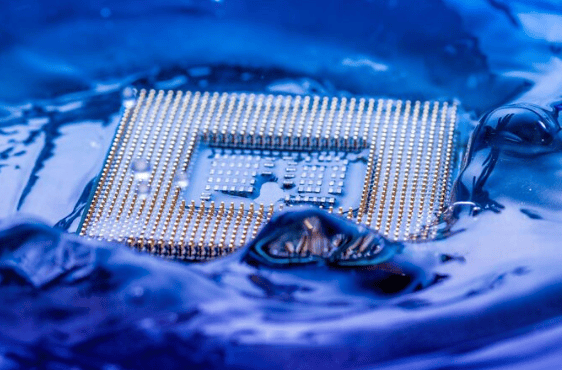
Up to 10 million gallons of ultrapure water can be used daily by a single advanced fabrication facility. much while the number is startling, it becomes much more urgent in light of the quickly rising need for chips. The United States alone is expected to treble its capacity for producing semiconductors during the next few years. Every new facility is a thirsty engine of expansion as well as a technical wonder.
Semiconductor Water Use – Key Facts
| Key Detail | Information |
|---|---|
| Ultrapure Water Use per Fab | Up to 10 million gallons per day |
| Level of Purity | Measured in parts-per-quadrillion |
| TSMC Reclaimed Water Goal (2023) | Achieved 12% reuse, up from 5% |
| Advanced Recycling Example | Gradiant facility recycles 99% of water using $300M investment |
| Recycled Water Usage | Often reused in cooling towers, not reintegrated into chip-cleaning systems |
| Common Recycling Challenges | Removing hard-to-filter contaminants like urea |
| Industry Expansion Impact | U.S. chipmaking capacity expected to triple by 2032 |
| Long-Term Goal | Net water positivity and near-zero liquid discharge |
| Data Sources | EPA, corporate environmental reports, industry interviews |
The amount of work required to filter and then recycle that water is really intriguing. Chipmakers like Intel and TSMC have made significant financial investments to address what is essentially an imperceptible issue. TSMC significantly increased their utilization of recycled water from 5% to 12% in 2023. However, despite these advancements, the total amount of water used per chip rose. Sustainability and growth rarely coexist.
Water recycling for chip manufacturing is a very complicated procedure. It goes beyond simply passing wastewater through a filter. To create something more akin to a lab-grade solvent than anything that can be consumed, you are purging it of ions, microorganisms, organics, and even gasses. This is beyond the capabilities of conventional wastewater systems. In actuality, multi-step treatment procedures and specially designed membranes are still needed to remove urea, a persistent substance present in household waste.
Because of this intricacy, collaborations between tech companies and environmental engineers have produced some of the most impressive advancements in this field. One notable example is the water technology business Gradiant, which constructed a plant that can recycle 99 percent of its water. Even after reaching that milestone with a $300 million investment, a little amount of water continues to elude recovery.
At a plant in Arizona, I recall being guided by engineers through these filtration lines. The water returned to the city cleaner than when it had come, and this was a source of modest pride. I will never forget that moment. It was more than just following the rules. The goal was to establish a precedent.
“Net water positivity” has emerged as the gold standard for industrial environmental initiatives in recent years. Some fabs try to leave no net load on their local ecosystems by purifying and returning more water than they use. A strong model is provided by Intel’s initiatives in Chandler, Arizona. Rebalancing the very resources that the plant once depleted, treated water is either reinjected into the groundwater or returned to nearby rivers.
However, there is a catch to even these success stories. The majority of recovered water is still not suitable for direct reintroduction into the ultrapure supply stream. Rather, it is redirected to scrubbers or cooling systems, which are secondary systems where complete purity is not necessary. For good reason, the requirements for chip-cleaning water are still extremely stringent. A batch of chips worth millions of dollars can be destroyed by a single impurity, which is measured in parts per quadrillion.
But the stakes are not just technical. They are social, political, and economic. Water availability is being taken into account by states and cities when determining incentives for new semiconductor factories. Residents who are already concerned about drought in water-scarce areas like Arizona or sections of Texas ask pointed questions about new factories.
Chipmakers are starting to release comprehensive water transparency reports in order to preserve public confidence. These aren’t only publicity stunts. They signify a growing trend toward accountability, as evidenced by systems altered as well as gallons saved.
It’s interesting to note that some businesses are even making money off of their wastewater streams. They are converting waste into resources by recovering valuable minerals like copper and recycling chemicals like isopropyl alcohol. It’s a really successful concept that balances economic gain with environmental responsibility.
Additionally, the way towns are reacting has quietly evolved. These days, some municipal planners include semiconductor plants in their long-term water infrastructure plans because they understand that cooperation, not limitation, is the more effective course of action. In fact, cities can improve their own water resilience by incorporating these large consumers into local recovery loops.
This is about reconsidering industrial interactions with natural resources, not simply technology. Energy has become a major focus of sustainability over the last ten years. Water, which was previously disregarded, is suddenly taking center stage.
The next hurdle for engineers and environmentalists is full-loop reintegration, which involves recycling wastewater back into chip-cleaning systems instead of only using it for cooling or discharge. Pilot projects are already under way in some regions of Asia and Europe, and the technology is getting closer. The ramifications are profound. A factory that attains almost complete water independence may completely change the way we view large-scale production.
Chipmakers are prepared for resiliency as well as restrictions by moving forward in this manner. Those who effectively control their inputs will be in a position to lead rather than just survive as climatic variability increases.
It’s simple to imagine semiconductors existing in labs with glass walls, unaffected by environmental limitations. However, a huge and delicate ballet of moisture and chemistry lies behind each laser-etched circuit. And more than ever, we are discovering that even the most sophisticated technology must yield to the necessities—clean air, reliable electricity, and, most importantly, an abundance of water.
Maybe a faster transistor won’t be the next big thing in chip advancement. It might result from a more subdued triumph that begins at the faucet and concludes with a wafer.