

| Feature | Description |
|---|---|
| Product Name | Toybox 3D Printer |
| Brand | Toybox Labs |
| Target Audience | Children ages 6+, educators, parents |
| Material Used | PLA filament (corn-based, compostable) |
| Setup Requirements | WiFi connection, Toybox App |
| App Availability | iOS, Android, Web |
| Printing Style | One-touch, layer-by-layer 3D printing |
| Catalog Access | 2,000+ toys and models, regularly updated |
| Key Selling Point | Kid-friendly, no design software needed |
| Price Range | Starts at approx. $299 USD |
| Official Website | https://www.toybox.com |
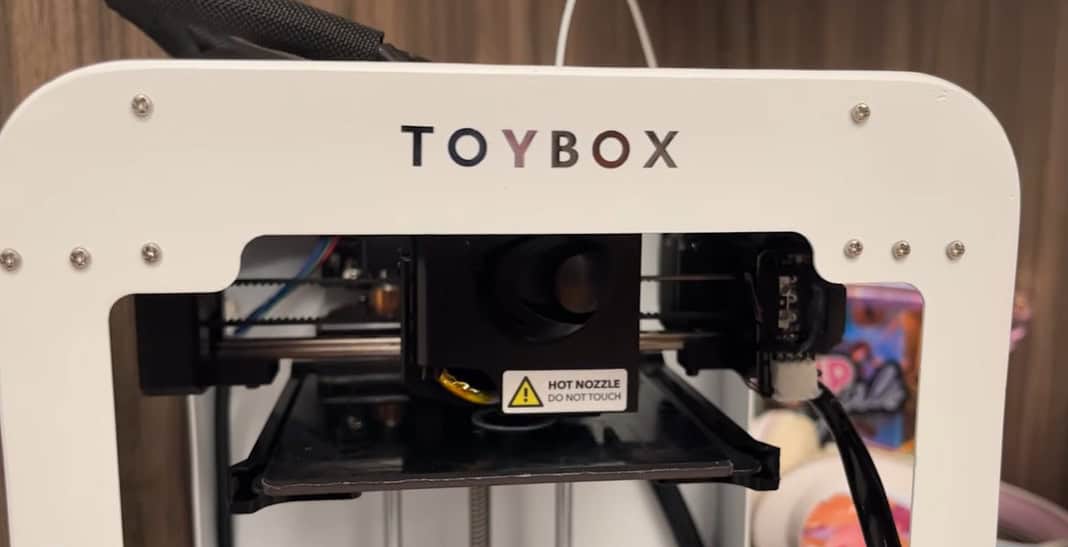
The Toybox 3D Printer has emerged as a surprising favorite among families looking for fun ways to combine technology and creativity in recent months. The gadget is colorful and small, and it looks more like a game console made by a toy company than scary tech equipment. Kids are initially drawn in by that approachability, but what really holds their attention is the interactive creation process.
A particularly novel product has been introduced by Toybox Labs through strategic product evolution. Stronger connectivity, increased print volume via the Comet edition, and a simpler setup procedure are all features of the upgraded Alpha Two model. Children as young as six can use it, and it’s still sturdy enough for inquisitive teenagers experimenting with engineering design.
Within minutes of downloading the Toybox app and establishing a WiFi connection, the device is operational. It is especially helpful for families who are new to 3D printing because it requires no time-consuming installation or calibration. After choosing a model from the extensive catalog, the user merely presses print. Because of its great efficiency, the one-touch feature spares young users from difficult commands or perplexing steps.
In the last ten years, parents and educators have advocated for STEM-based toys that stimulate young brains. This goal is perfectly aligned with the Toybox printer. The device’s purpose is very clear: it’s not just a printer; it’s a gateway to sustainability, engineering, and design. Nowadays, a lot of schools have makerspaces where kids can print anything from architectural models to math manipulatives.
Inspired by a science lesson, my own 9-year-old printed a bridge design. We talked about load distribution and design symmetry as we watched it gradually come out of the heated nozzle. Cleverly, it was disguised as play, but it was learning. That educational value is increased by the Creator Space platform. With simple, browser-based tools, kids can create completely new shapes or customize toys. Silently woven into screen time is design education.
By prioritizing environmentally friendly materials, Toybox advances even further. It is a more eco-friendly choice because it uses PLA filament, which is made from cornstarch. PLA is far safer to use indoors than ABS, which can release disagreeable fumes. For parents who are worried about bringing new technology into their children’s surroundings, that is especially reassuring.
Children’s interactions with information were altered by remote learning during the pandemic. Toybox took the role of a teaching tool as well as a diversion. Students voted on which items to print during teachers’ digital workshops, which encouraged cooperation and curiosity. With careful use, this printer evolved into a virtual companion in hybrid learning rather than just a gadget.
Buzz about celebrities has also helped. Even tech-savvy entertainers and influencers have included Toybox in their roundups of parents. In a recent interview, Jessica Alba noted that in a time when passive screen consumption is the norm, toys that encourage children to build are particularly beneficial. Without the learning curve that comes with CAD software or tech kits, Toybox provides just that empowerment.
The overwhelming delight of printing is a recurring theme in the majority of Toybox reviews. Whether it’s a cookie cutter or a rocket ship, the end product is observable and fulfilling. For parents who are used to paying monthly fees for app subscriptions, Toybox provides a pleasantly tactile return on investment. Its products are available as birthday party giveaways, keychains, and shelves.
Given its functionality, Toybox manages to stay surprisingly affordable through strategic pricing. Although $299 might seem expensive at first, it provides significantly more engagement value and is comparable to many tablets. Although access to an expanding content library is made possible by the optional Toybox Plus subscription, hundreds of prints are still freely accessible without it. This pricing strategy promotes entry without restricting experience.
Children have been urged in recent years to become both creators and consumers of technology. Toybox supports that change. Children create their own toys instead of purchasing them. That mental shift is especially crucial. It fosters autonomy. A 7-year-old who creates her own figurine might grow up to be a product engineer or architect.
Toybox accomplishes what few devices can: sustained attention with educational value by fusing socially conscious materials and user-friendly technology. The simplest concepts—such as a toy that prints other toys—tend to last the longest as industries compete to appeal to younger consumers.
The value of the Toybox 3D Printer for parents is found in the creativity it inspires as well as the toys it produces. This item does more than just occupy a shelf. It creates, acts, and asks children to imagine something before making it a reality. Both the magic and its impact are difficult to diminish.