
I spent many late nights with a top radiologist reviewing mammograms a few years ago. Between each scan, he massaged his eyes, clearly tired, but his focus remained fixed. “This one is worth checking again,” he added, gesturing to a barely noticeable shadow. Machines never become weary. They don’t blinked. They’re also being asked to perform the exact same thing he was doing, just more quickly.
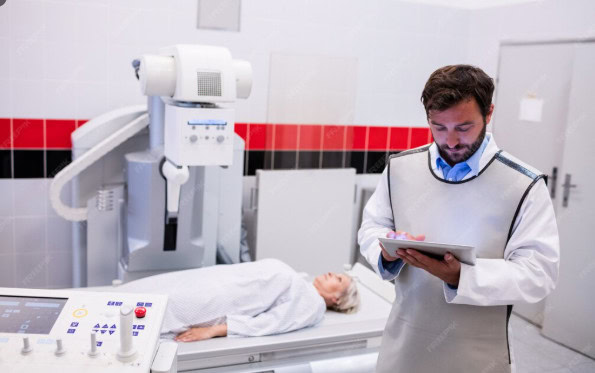
These days, AI systems are incredibly good at identifying anomalies in medical imaging. These algorithms may quickly detect patterns associated with diseases like cancer, pneumonia, or diabetic retinopathy in images such as dermatological pictures, MRIs, or chest X-rays. Their ability to recognize patterns is not only acute, but also persistent. In contrast to humans, they do not experience emotional or cognitive exhaustion following the 50th scan of the day.
Key Facts – Can Machines Diagnose Disease Better Than Doctors?
| Key Aspect | Detail |
|---|---|
| AI Strengths | Fast pattern recognition, high accuracy with imaging, fatigue-free, consistent data analysis |
| Doctor’s Unique Role | Emotional intelligence, nuanced judgment, handling of complex and rare cases, ethics |
| Study Reference | 195 patient queries evaluated; AI responses rated higher in empathy and quality by medical panel |
| Legal Considerations | Issues of liability, privacy, and decision-making authority remain unresolved |
| Future Outlook | Collaboration between AI and doctors is considered the most effective path forward |
| External Source | Harvard Health Blog |
The advantages are especially noticeable in fields like pathology and radiography. A considerable reduction in false negatives was achieved by one AI program that was trained on hundreds of breast cancer scans. The outcome? less missed diagnoses, possibly earlier detection, and a new degree of consistency that is hard for humans to match. Another benefit of machines is their high degree of dependability when doing repetitive tasks. They make sure to double-check and don’t let their emotions influence their decisions.
However, diagnosis is more than merely interpreting data. Fundamentally, it’s a dialogue—a process interwoven with background information, context, intuition, and body language. Despite their speed, machines are unable to see the full person. When a patient talks about their eating habits, a doctor will notice the uneasy silence. They may see a limp not noted in the documentation or detect mental anguish masquerading as exhaustion.
That human subtlety is still important.
Researchers have compared ChatGPT-generated responses to actual physician responses in order to investigate how AI functions in more communicative contexts. They gathered over 200 actual health queries that were posted online and assessed both sets of responses for empathy and medical accuracy. It’s interesting to see that AI won both categories. Its answers were thought to be more instructive in certain instances. more sympathetic in others.
That made me pause—not because I thought AI would be dispassionate, but rather because it seemed uncannily human given how well it could mimic empathy.
These days, machines are able to create responses that sound sympathetic, comforting, and even emotionally sensitive. Sounding isn’t being, though. When a doctor demonstrates empathy, it comes from years of medical education, patient interactions, and emotional fortitude. An AI is imitating comprehension when it writes, “I understand this must be difficult,” rather than truly understanding.
However, for many patients, that may be sufficient in digital medicine.
Accountability is an additional factor in this equation. Who is responsible if an AI system makes a dangerously incorrect recommendation or misdiagnoses a patient? Developers? Medical facilities? The patient who had faith in the program? Legal certainty is still developing, and ambiguity in the healthcare industry is harmful as well as uncomfortable.
Physicians are subject to institutional scrutiny, licensing, and ethical norms. No, machines don’t.
The most progressive doctors, however, are working with AI rather than attempting to outcompete it, which is what makes this conversation so fascinating. Consider a situation in which a diagnostic assistant examines a patient’s scan, identifies abnormalities, and recommends a shortlist of probable diagnoses. Then, taking into account the patient’s lifestyle, personal history, and long-term health objectives, the physician evaluates the findings with the larger clinical picture in mind.
Without compromising the quality of care, this type of collaboration could greatly increase diagnostic speed and accuracy. More significantly, it allows physicians to concentrate on what they do best, which is to listen, explain, and establish trust.
This balance already shows promise in hospitals with high patient volumes. Particularly for illnesses where early identification is crucial, several institutions report noticeably higher screening rates. These improvements are useful and patient-focused in addition to being technological.
However, there are differences in implementation. In rural areas or smaller clinics, AI tools remain limited due to cost, training requirements, and infrastructure challenges. Additionally, there is cultural hesitancy. Some healthcare providers see these systems as intrusive, or even as a threat to their professional judgment.
That resistance is understandable. Data and intuition have always been balanced in medicine. When machines start offering statistically sound recommendations, it’s easy to wonder—who’s truly making the call?
Medical schools are adapting. Training programs now include AI literacy, data ethics, and algorithmic reasoning. The next generation of doctors is being equipped to use digital tools not as crutches, but as extensions of their expertise. This progression, which combines traditional care principles with technology advancement, is especially inventive.
Expectations are also changing for patients. A growing number are comfortable interacting with chatbots for basic triage. They appreciate quick answers, particularly when they’re exceptionally clear and easy to follow. The convenience is hard to ignore, especially in a healthcare system that often feels slow, confusing, or impersonal.
Still, for most people, when a serious diagnosis is on the table, reassurance is best delivered by someone in the room.