

Modular Smartphone Details
| Feature | Description |
| Concept Foundation | Initiated by Phonebloks (2013), advanced through Google’s Project Ara |
| Popular Brands | Fairphone, Shiftphone, HMD Fusion, PinePhone |
| Main Advantages | Replaceable modules, sustainable design, easy self-repair |
| Primary Users | Ethical consumers, environmental advocates, tech enthusiasts |
| Notable Limitation | Bulkier design and limited mainstream support |
| Average Cost | Between $300 to $700 depending on model and specifications |
| Environmental Benefits | Reduces e-waste, limits overconsumption, promotes longer product life |
| Latest Highlight | Fairphone 5 released August 2023 with 5-year warranty and 8-year software support |
| Supporting Influencers | Tech YouTubers (Marques Brownlee), sustainability advocates |
| Reference Source | www.fairphone.com |
Modular smartphones have evolved over the last ten years from futuristic prototypes to incredibly successful products for customers who care about the environment. With the help of Dutch designer Dave Hakkens’ Phonebloks concept, what started out as an experimental idea has progressively transformed into an ethical electronics movement. Modular smartphones let you replace just the damaged or out-of-date parts, not the entire device, in contrast to mainstream phones that promote frequent upgrades and speedy disposals.
In the early stages of this idea, Google’s Project Ara made an effort to completely rethink mobile hardware. The phone felt a lot like building your own PC because its parts—cameras, batteries, and processors—were easily interchangeable. However, the idea had trouble gaining traction in the marketplace, as is frequently the case in sectors characterized by high profit margins and turnover. Nevertheless, it left a legacy of openness and curiosity.
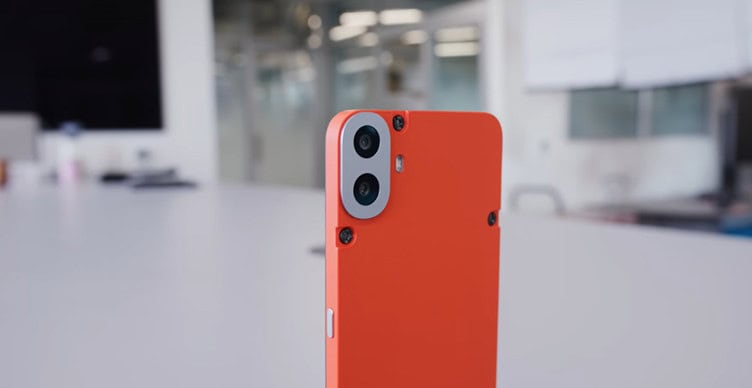
The Dutch social enterprise Fairphone took up that thread and took off. Their strategy has been especially creative since it guarantees that every module is sourced ethically in addition to allowing users to exchange their phone parts. Fairphone’s dedication over the last few years has produced remarkably affordable, incredibly durable, and carbon footprint-reducing products. One of the longest-supported smartphones ever, the Fairphone 5 was released in 2023 and comes with eight years of software updates.
Ethical consumption has become the norm in recent years. Many people find that a modular phone’s appeal extends beyond its technical features to include what it stands for. It is a deliberate rejection of planned obsolescence, which holds that devices should be made to break down rapidly so that consumers will continue to spend money. Modular phone design not only saves money but also fosters a stronger emotional bond with your device by prolonging its lifespan.
Interestingly, the capacity for self-healing proved especially advantageous during the pandemic. Many were left stranded with broken screens or dead batteries as repair shops closed and supply chains froze. However, those who owned modular phones replaced their malfunctioning components at home. During this time, the move to repairable technology was motivated by resilience as much as convenience.
Despite being shelved, Project Ara is still a significant component of this timeline. With Google’s support and an initial starter kit price of just $50, its goal was to make customizable smartphones accessible to as many people as possible. It could have democratized hardware in the same way that Android democratized software by utilizing an endoskeleton and several detachable parts. However, the project was quietly abandoned due to ongoing hardware improvements and a lack of interest from mobile carriers. But the discussion it sparked never really ended.
Fairphone’s modest but consistent trajectory appears to be far more sustainable in contrast. The brand has demonstrated that there is a market for mindful technology with more than 400,000 units sold in Europe alone. The idea that modular phones are only for do-it-yourselfers has been disproved by the recent models’ notable improvements in processing speed and camera quality. Due to this change brought about by user feedback, Fairphone is now a silent but tenacious competitor in a market that has long been controlled by marketing behemoths.
The wider societal impact is what makes this particularly compelling. Concerns over conflict minerals, electronic waste, and unfair labor practices are all intertwined with modular smartphones. Conventional smartphones, for instance, depend on rare earth metals, which are frequently obtained from areas where environmental degradation and human rights violations are prevalent. Modular phone companies provide a way forward that is based on ethics rather than just innovation by sourcing fair-trade materials and encouraging transparency.
HMD Fusion is a newcomer to the market with a $300 modular phone that is remarkably reasonably priced. The phone features “Fusion outfits,” which are replaceable covers that add extra features like solar charging or thermal imaging, even though its specs aren’t flagship-level. These highly adaptable accessories portend an exciting future in which users—from field researchers to filmmakers—will be able to customize their devices to meet extremely specific needs.
Marques Brownlee and other tech reviewers have also focused on this category. He emphasized how user-focused design can combine functionality and personalization in his analysis of contemporary modular designs. Modular phones may not be the fastest phones on the market, but their emphasis on durability and adaptability is a welcome change.
Modular phones might be the next logical step for celebrities who support environmental causes. Even though they haven’t been formally endorsed yet, celebrities who are outspoken about sustainability, like Emma Watson and Mark Ruffalo, might soon show interest in ethical technology. When that occurs, fan bases are likely to be affected, especially younger audiences who are already wary of constant consumerism.
Going forward, modularity is about reconsidering our relationship with technology, not just cutting costs or waste. Imagine going on vacation with a high-end camera module that you borrow rather than purchasing a new phone. or in which academic institutions provide students with learning-focused modules that are equipped with AI chips or sensor-based science lab equipment. These concepts are still in their infancy and go beyond mere fantasy.
Modular smartphones might eventually surpass their static counterparts in an era that is becoming more and more characterized by customization—not in terms of raw power, but rather in terms of practical application. Through their integration with digital equity movements and larger sustainability initiatives, they have the potential to redefine smartphone ownership. Modular phones might soon be seen as a smarter, slower, and more sustainable form of technology, much like bicycles have come back to be seen as emblems of environmentally conscious urban living.