

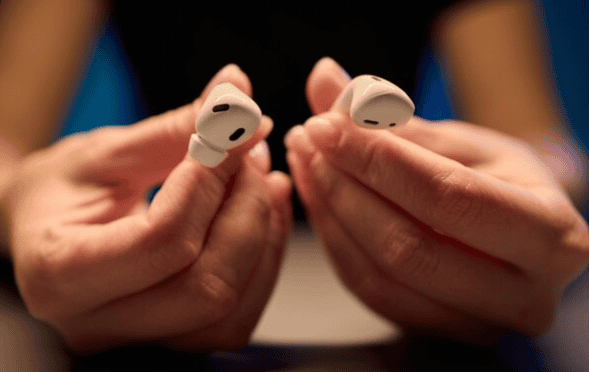
When I strolled through a coffee shop close to a university campus a year ago, it appeared like every other table had someone fussing with AirPods, periodically tapping or tweaking the white plastic stems in a ritualistic manner. These tiny white gadgets seemed to have come to represent independence, productivity, and high-tech simplicity. However, something has changed recently.
All of a sudden, the identical tables are covered in dangling wires once more. In a deliberate reference to a previous digital era, slender white connections snake from ears to phones. The change hasn’t been advertised or made loud. It has quietly emerged, driven by aesthetic choice, strengthened by pragmatic disappointments, and cemented by an unanticipated cultural realignment.
Key Reasons People Are Switching from AirPods to Wired Earphones
| Factor | Explanation |
|---|---|
| Aesthetic Appeal | Wired headphones evoke a Y2K-inspired retro look embraced by Gen Z |
| Practical Reliability | No charging, fewer connectivity issues, and more durable sound quality |
| Celebrity Influence | Stars like Bella Hadid and Paul Mescal normalize wired as stylish |
| Cost-Effectiveness | Wired options are surprisingly affordable compared to premium wireless gear |
| Health & Hygiene | EMF concerns and better hygiene drive users to reconsider Bluetooth |
These days, using wired headphones is more about control than nostalgia. In particular, Gen Z has elevated the “wired look” into something tactile, purposeful, and little defiant that is remarkably akin to the resurgence of vinyl or Polaroids. The decision to choose analog rather than automated has a clear purpose. “I don’t need the latest to be the smartest,” it says.
Interestingly, this change isn’t limited to a single group of people. Creatives, urban professionals, and even some technologists have begun to abandon WiFi settings. A portion of the explanation is quite straightforward: connected headphones simply function. There are no mysterious Bluetooth malfunctions, no silent fear when your earphones die in the middle of a call, and no 20-minute search for a charging case. The wired alternative, on the other hand, is almost archaic in its simplicity: plug in, hit play, and start.
The issue of audio quality comes next. A lot of customers were enticed by the prospect of “wireless freedom,” but audiophiles stayed. The argument that wired headphones produce a richer, clearer sound has been around for a while. Uncompressed audio is notably more immersive due to its lower delay and dropout rates. And that fidelity is more important than ever in a time when hyperpop and lo-fi tracks coexist on the same playlists.
In addition, there is the silent practical math. The original Apple EarPods cost less than $20 at retail. That is an incredibly affordable pricing point when compared to the price of AirPods Pro, which is approximately $250 before taxes. The affordability of connected equipment becomes not only alluring but also empowering, especially for students or anyone balancing financial responsibilities.
Health issues have also entered the picture. Some Bluetooth gadget users are particularly wary of radio-frequency emissions, even if the science is currently ambiguous. Some users have reported headaches, ear pain, or even nervousness when using AirPods for extended periods of time. Many have turned back to wired alternatives because to their uneasiness, whether it stems from science or psychology. It’s damage reduction, not hysteria, especially for people who are already experiencing sensory overload in digital settings.
A smaller but equally important function is played by hygiene. Long periods of continuous use are encouraged by wireless buds, especially those that fit deep into the ear canal. The outcome? Irritation, germs, and moisture. In contrast, the usage of wired headphones is more sporadic and frequently occurs quickly—at the gym, during walks, or in between classes. Pauses are encouraged by their very design.
The fact that this change was lately mirrored in entertainment media as well as on the streets shocked me. An independent filmmaker apologized in the middle of a livestream while adjusting her wired headphones because the cord was dragging across her sweater in a recent interview tape. I apologize for becoming analog once more, she said with a laugh. Her tone was refreshingly honest, as if she had left a tech race she no longer wanted to compete in. I recall grinning to herself.
That kind of casual comment encapsulates the true meaning of this change: a modest but significant declaration of independence. Going wired is a tangible, visible act of opting out, even for a short time, in a time when everything is becoming more automated and AI-assisted. It serves as a reminder that not every choice must be made with efficiency in mind. Convenience may not always be as important as clarity.
Of sure, style has contributed, but not in the typical ways. Once seen to be cumbersome or antiquated, wired headphones are now a part of a developing style known as “low-key luxury.” Bella Hadid has been spotted wearing $4,000 jackets and sporting $17 Apple EarPods on city streets. The contrast is deliberate—and successful, especially on social media. It conveys confidence without being overly forceful. Additionally, it provides a level of class mobility that is uncommon in technology.
The switch isn’t entirely anti-modern. It’s actually a hybrid answer for a lot of people. Smartphones, streaming services, and even playlists selected by artificial intelligence coexist with wired headphones. The choice to slow down a single, little step in the process makes a difference. to directly link sound to action.
The shift has been observed by retailers. The demand for wired devices has significantly increased since mid-2025, according to owners of tech accessory stores in Brooklyn and Austin. One store manager said that because consumers, particularly teenagers, ask for their wired stock by name, they now keep it at the counter. She remarked, “They want the white ones.” “Those who resembled their parents.”
Admiration for the full-circle moment is difficult to resist. What started off as a fad—almost a fashion statement—has evolved into a representation of more ingrained behaviors. Although people have shorter attention spans, they still have a desire for experiences that are grounded and meaningful. In a tiny, real way, wired headphones aid in reestablishing that equilibrium.
This could pose an intriguing paradox for companies such as Apple. These days, their most culturally relevant product is also the most reasonably priced. It contradicts the conventional marketing arc, which demands wireless, smaller, and faster. Wired headphones are meant to be visible if the AirPods were made to vanish.
The point is that visibility. Wires snag when you’re in a hurry, swing when you walk, and tangle when you toss them into a bag. Each of those situations serves as a reminder that you are a part of the process. You choose to be linked to technology rather than merely being passively plugged in.
And at this moment, it feels really powerful to just decide whether to connect in, tune out, or switch to analog.